Lumper Fees: Who Pays, and How Owner-Operators Get Reimbursed
The short answer
A lumper fee is what a warehouse or its unloading contractor charges to take freight off your truck. Federal law puts that cost on the shipper or receiver that requires the help, not on you. In practice the driver often pays at the dock and gets the money back later, from the broker or the carrier, with a receipt.
Whether you actually get it back depends on two things: what your rate confirmation or lease says about unloading, and whether you hand in the right receipt on time. This guide covers both. Waiting time at the same dock is a separate charge, covered in our guide to detention, layover and TONU.
What a lumper is and where you meet one
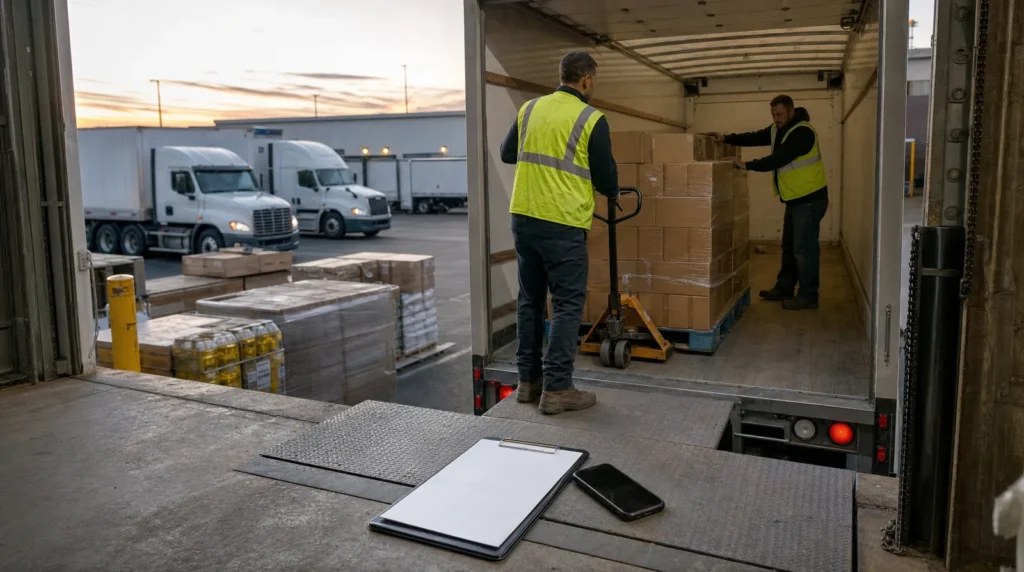
A lumper is a person or crew that loads or unloads freight for pay. You meet them most at large receivers: grocery and retail distribution centers, food warehouses and some cold storage sites. Many of these docks do not let drivers unload at all. The dock assigns the job to its own crew or to a contractor, and the contractor bills for it.
For a box truck or cargo van owner, the load is often a few pallets or a stack of cases, so the fee can look out of proportion to the work. That does not change who owes it. The question to settle is always the same: who agreed to pay for unloading on this load, and how do you get the money back to the right person.
Who pays, under federal law
The rule is in 49 U.S.C. 14103. Part (a) says that when a shipper or receiver requires that the driver “be assisted in the loading or unloading of such vehicle, the shipper or receiver shall be responsible for providing such assistance or shall compensate the owner or operator for all costs associated with securing and compensating the person or persons providing such assistance.”
Part (b) makes it unlawful “to coerce or attempt to coerce” anyone hauling freight for pay “to load or unload any part of such property” or “to employ or pay one or more persons to load or unload” it.
So the cost belongs on the shipper or receiver side. What the law does not do is make the money appear at the dock. The receiver usually wants payment before the crew starts, and the money then travels back through the paperwork: from you to the broker or carrier, and from them to the shipper. That chain is where reimbursements get lost.
How the fee gets paid at the dock
There are three common ways, and which one applies is set by whoever booked the load.
- A payment code from the broker or carrier. Many brokers and carriers send the driver a one-time electronic check code through a fuel card or payment network. You hand the code to the lumper service and nothing comes out of your pocket.
- You pay and get reimbursed. You pay by card or cash, keep the receipt, and the amount is added to your invoice or settlement.
- The receiver bills the shipper directly. Some receivers send the bill to the shipper and the driver pays nothing. Ask the dock before you assume this.
If the dock asks for payment and you have no code and no written promise of reimbursement, call the broker or your carrier before you pay. A call from the dock, with the receiver’s contact on the line, is far easier than arguing about it a week later.
Put the reimbursement in writing first
Under your own authority. When you haul for a broker under your own MC, the terms for the load live in the rate confirmation. Before you accept, check that it says:
- whether lumper or unloading fees are reimbursed on this load;
- how they are paid at the dock: a code, or you pay and bill it;
- what receipt the broker needs, and whether a photo of it is required;
- how soon after delivery you have to send it.
If the load is to a grocery or retail distribution center and the rate confirmation says nothing about unloading, ask for a line to be added before you roll. Agreement on the phone is hard to prove later.
Leased to a carrier. Federal leasing rules in 49 CFR 376.12 require the lease to say who unloads: “The lease shall clearly specify who is responsible for loading and unloading the property onto and from the motor vehicle, and the compensation, if any, to be paid for this service.” The same section requires the lease to list every charge-back item that the carrier can deduct from your pay, and how each one is worked out. Read both parts. If lumper fees can be charged back to you, the lease has to say so.
Want freight that pays weekly?
Apply with SuntransExpress and choose your path on the form: run under SuntransExpress authority, or keep your own MC and haul our freight.
The receipt that gets you paid back
Most lumper reimbursements that go wrong go wrong on the receipt. Before you leave the dock, check that it shows:
- the name of the warehouse or lumper service;
- the date and the amount paid;
- a reference that ties it to your load: the PO number, the load number or the bill of lading number;
- how it was paid: the code number, card or cash.
Take a clear photo of it at the dock, next to the signed delivery paperwork. Send it with the proof of delivery, not on its own a few days later. A broker matches the receipt to the load by those numbers, and a receipt that arrives separately is the one that gets missed. What else belongs in that delivery packet is in our guide to proof of delivery.
When the reimbursement does not come
Work through it in this order.
- Check your own paper first. Find the line in the rate confirmation or lease that covers unloading, and the receipt with the load reference on it. Without both, you are asking, not claiming.
- Send one written request. Email the broker or carrier with the load number, the amount, the receipt and the line in the agreement. Keep it short and keep a copy.
- Use your records rights. If you are leased on, the leasing rules say you must be given copies of the documents needed to check a charge-back. If you hauled for a broker, 49 CFR 371.3 says each party to a brokered load “has the right to review the record of the transaction” that the broker has to keep.
- Decide on the next load. A broker who does not pay lumper fees it agreed to will do it again. That is information for the next rate confirmation from that broker.
FAQ
Is a lumper fee the same as detention? No. A lumper fee pays for unloading. Detention pays you for waiting past the free time. One load can have both, and each needs its own proof.
Can I refuse to pay a lumper? Federal law makes it unlawful to coerce a driver to pay for unloading, but the receiver can still decline to unload your truck. In practice, call the broker or carrier from the dock and get the payment method settled there.
Can I unload the freight myself to avoid the fee? Only if the receiver allows it. Many distribution centers do not let drivers on the dock floor.
Do I pay tax on a lumper reimbursement? The fee and the reimbursement are business money in and out. Keep the receipt with the load records and ask your tax preparer how to book them.
What this looks like at SuntransExpress
SuntransExpress works with cargo van, Sprinter and box truck owner-operators on two paths, as set out on our owner-operator page: run under SuntransExpress authority, or keep your own MC and haul our freight. The page lists weekly pay and notes that your own MC is not required in many programs. If you are deciding between those paths, our guide on running under your own MC walks through the trade-offs.
How unloading fees are handled on a given load is in the paperwork for that load. Ask about it before you accept. Questions before you apply can go to hr@suntransexpress.com or +1 (941) 337-52-33.
Got questions about running with us? Dispatch will walk you through it. No pressure, no obligation.
Talk to us
Recourse vs Non-Recourse Freight Factoring
How freight factoring works for van and box truck owners on their own MC, what recourse and non-recourse really cover, and the contract clauses…
Read the guide →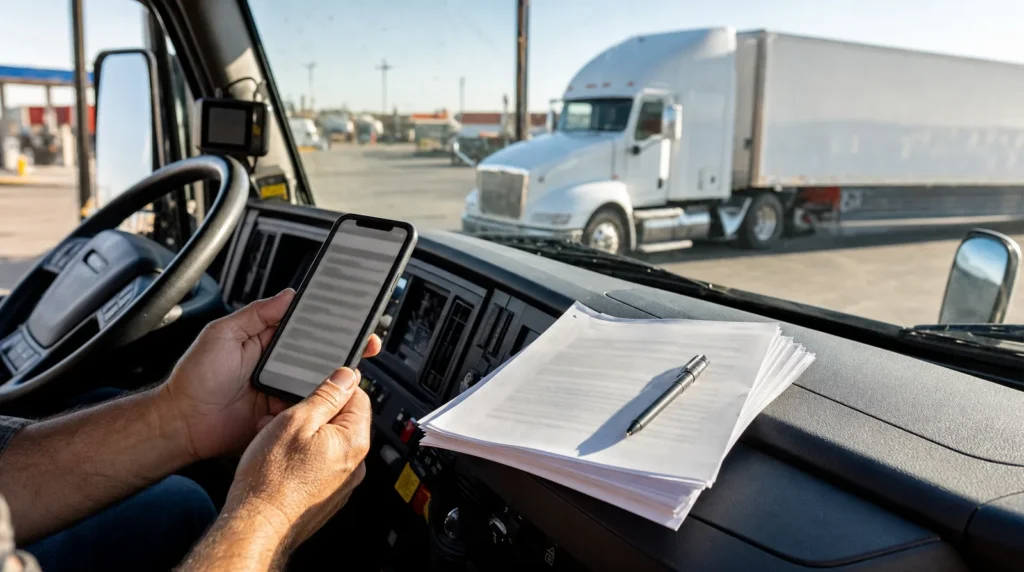
Rate Confirmation: What to Check Before You Haul the Load
A four-pass check of a broker's rate confirmation for van and box truck owners with their own MC: the sender, the load, the money…
Read the guide →
How to Start a Cargo Van Business: 4 Ways to Find Work
The four ways a cargo van finds paid freight: lease on to a carrier, your own authority and load boards, courier apps, or direct…
Read the guide →Ready to get on the road?
Weekly pay, 24/7 dispatch support, and nationwide expedited loads, with or without your own MC authority.