How to Start a Cargo Van Business: 4 Ways to Find Work
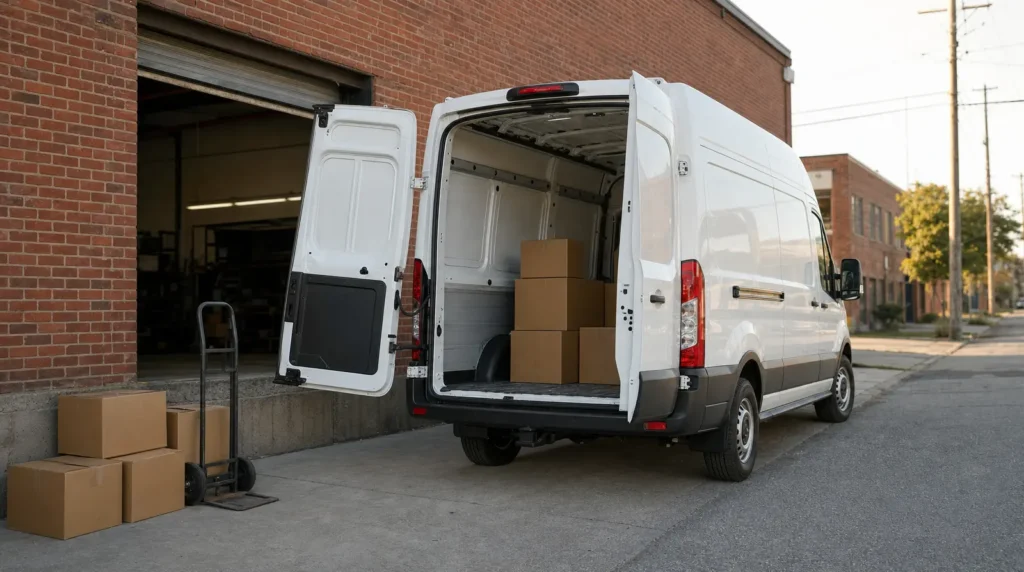
The short answer
A cargo van business is a way of finding paid freight for one van, and there are four common ways to find it: lease the van on to a carrier that already has authority, get your own authority and book loads yourself, sign up with delivery and courier apps, or sign direct contracts with local businesses. Each one asks for different paperwork, insurance and money up front. The van is the same in all four. What changes is whose name the freight moves under.
This guide walks through what each path needs before your first load. What the first months cost, and why cash runs short before the first settlement, is in our guide to starting a Sprinter van business, so we don’t repeat it here.
Before any path: read the door-jamb label
The rules that apply to your van start with its gross vehicle weight rating, printed on the label in the driver’s door jamb. Federal rules in 49 CFR 390.5 treat a vehicle used in interstate commerce as a commercial motor vehicle when its rating or its actual weight, whichever is greater, is 10,001 pounds or more. Many cargo vans are rated under that line and some heavier versions are rated over it, so read your own label rather than the brochure.
Two things do not change at that line. First, you do not need a commercial driver’s license for a cargo van carrying ordinary freight: the CDL groups in 49 CFR 383.5 start at 26,001 pounds for a single vehicle, apart from vans built for 16 or more passengers and loads of placarded hazardous materials. Second, the line does decide which insurance minimum applies if you run under your own authority, which we cover in path 2.
Path 1: lease on to an expedite carrier
You own or finance the van, and a carrier with operating authority puts it to work on its freight. The freight moves under the carrier’s authority and the carrier’s insurance filings, so you do not file for your own.
The deal is a lease, and federal rules set what it has to contain. Under 49 CFR 376.12 the lease must say that the carrier “shall have exclusive possession, control, and use of the equipment for the duration of the lease,” and it has to state the pay, the charge-back items and any escrow. Our guide to cargo van owner-operator jobs lists the questions to ask a carrier about those terms.
What you need to start:
- The van, with the rating on the label known.
- A valid driver’s license and a driving record the carrier will accept.
- The paperwork the carrier asks for. If the van is rated 10,001 pounds or more, the carrier has to qualify you as a driver under federal rules; under the line, what it asks for is its own policy.
- The insurance the lease puts on you. Read which policies the carrier carries and which ones you buy.
What you don’t need: your own MC number, your own liability filing, or a load board subscription. Dispatch and booking come from the carrier.
This is the fastest path to a first load and the one with the least money up front. The trade-off is that the carrier chooses the freight and sets the pay basis in the lease.
Have a cargo van and want freight this month?
Apply with SuntransExpress and choose your path on the form: run under SuntransExpress authority, or keep your own MC and haul our freight.
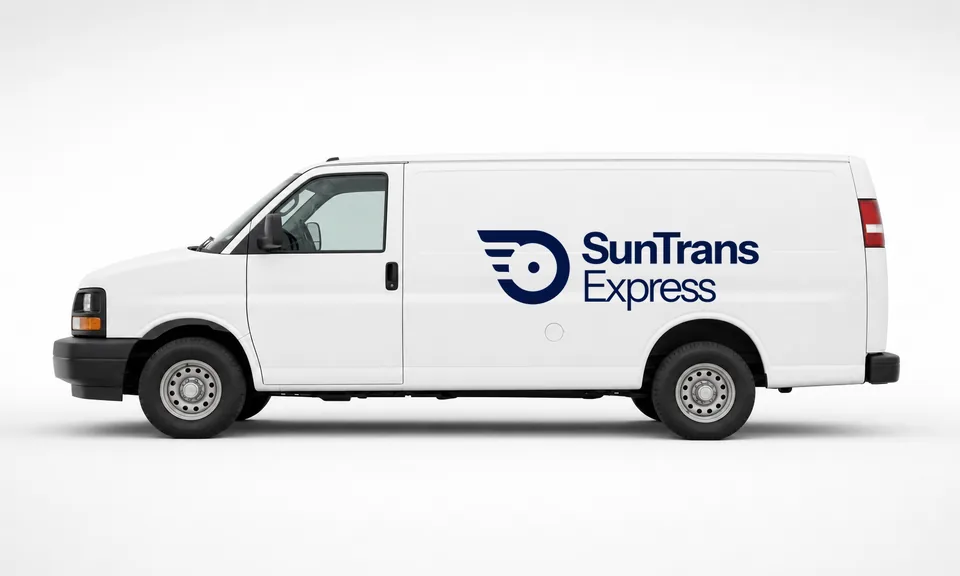
Path 2: your own authority and load boards
You register as a for-hire motor carrier, carry your own insurance and book freight yourself from brokers and shippers. Every load and every customer is yours to find.
What you need to start:
- Registration. A for-hire carrier files Form MCSA-1, the online registration application, with FMCSA to identify its operations and to obtain operating authority, as set out in 49 CFR 390.201. The filing fee for an application for USDOT registration is $300 under 49 CFR 360.3.
- Liability insurance on file. Under 49 CFR 387.301, no for-hire carrier “shall engage in interstate or foreign commerce” until proof of insurance in the required amount is filed with and accepted by FMCSA. For a fleet made up only of vehicles under 10,001 pounds carrying general freight, the minimum in 49 CFR 387.303 is $300,000. At 10,001 pounds and over it is $750,000. A broker or shipper can ask for higher limits, and for cargo coverage, in its own setup terms.
- Customers. Load boards, broker setup packets and your own sales. Each broker sets its own rules for which carriers it books.
This path keeps the whole rate, and it adds compliance, collections and finding freight to your workload. How to set it up step by step, and how to keep your MC while hauling a carrier’s freight, is in our guide to running with your own MC authority. Where cargo van freight comes from, and why, is in box truck and cargo van loads.
Path 3: delivery and courier apps
Courier apps match a driver and vehicle to local deliveries booked by businesses. You sign up as an independent driver, and the app sets the vehicle rules, the price and the dispatch.
The rules differ by app, so read each one’s requirements page. As one example, the FRAYT driver page lists these for its cargo and Sprinter van class: driver 21 or older, a vehicle under 10,000 GVW and 20 years old or newer, registration and insurance issued in your state of residence, state minimum insurance (with a higher minimum in Florida), and the ability to lift and carry packages up to 50 pounds (FRAYT driver requirements).
What you need to start: the van, a clean driving record, an approved background check and a phone. There is no federal filing on this path when the app takes the role of the carrier, but check what your personal auto policy says about commercial use. A policy that excludes deliveries can leave you uncovered on the job.
Apps can fill the hours between longer runs, or let you learn local routes before committing to a lease or your own authority. How much work an app has depends on your city and the hour.
Path 4: direct final-mile and local contracts
Here you sign a contract direct with a business: a parts distributor that needs a daily route, a print shop, a medical supplier, a furniture or appliance store with last-mile deliveries. You invoice the customer yourself.
What you need to start:
- The registration and insurance for the work you do. If the freight crosses a state line for hire, you are a for-hire interstate carrier and path 2 applies. Work that stays inside one state falls under that state’s rules, which vary, so check with your state’s transportation agency before you quote.
- The insurance the customer asks for in the contract, which is often more than the legal minimum.
- A way to invoice and get paid on the customer’s terms.
Direct contracts can give steady routes. They take selling time, and one customer leaving can empty the calendar.
The four paths side by side
- Lease on: carrier’s authority and filings; you need the van, your license and the carrier’s paperwork; the carrier finds the freight.
- Own authority: MCSA-1, $300 registration fee, liability insurance on file ($300,000 minimum under 10,001 pounds); you find the freight.
- Apps: the app’s vehicle and driver rules; the app finds the deliveries; check commercial use on your auto policy.
- Direct contracts: registration and insurance for the work (interstate for hire means path 2); you find and keep the customer.
The paths are not a one-time choice. A lease on can get a new van earning while you learn lanes, and an owner who later gets an MC can still haul a carrier’s freight under it.
Questions owners ask
Can I start a cargo van business for under $300? Not on your own authority: the USDOT registration fee alone is $300, before insurance. On a lease on or an app there is no federal filing fee for you. Whatever the carrier or app charges is in its own terms.
Do I need a CDL for a cargo van? Not for ordinary freight. The CDL groups start at 26,001 pounds for a single vehicle, apart from 16-plus passenger vans and placarded hazardous materials.
Do I need my own MC number to start? Only if you haul for hire across state lines under your own name. On a lease on, the freight moves under the carrier’s authority.
Is a business plan worth writing? Write down the path you are choosing, the insurance it requires, your monthly costs and how long you can run before the first payment. The Sprinter van business guide linked at the top covers the last two.
What this looks like at SuntransExpress
SuntransExpress works with cargo van, Sprinter and box truck owner-operators on two paths, as set out on our owner-operator page: run under SuntransExpress authority, or keep your own MC and haul our freight. The page lists weekly pay and notes that your own MC is not required in many programs.
Before you apply, read the rating on your door-jamb label and decide which of the two paths fits you. Questions before you apply can go to hr@suntransexpress.com or +1 (941) 337-52-33.
Got questions about running with us? Dispatch will walk you through it. No pressure, no obligation.
Talk to us
Recourse vs Non-Recourse Freight Factoring
How freight factoring works for van and box truck owners on their own MC, what recourse and non-recourse really cover, and the contract clauses…
Read the guide →
Rate Confirmation: What to Check Before You Haul the Load
A four-pass check of a broker's rate confirmation for van and box truck owners with their own MC: the sender, the load, the money…
Read the guide →
Lumper Fees: Who Pays, and How Owner-Operators Get Reimbursed
Who owes a lumper fee under federal law, how it gets paid at the dock, and the receipt and paperwork you need to get…
Read the guide →Ready to get on the road?
Weekly pay, 24/7 dispatch support, and nationwide expedited loads, with or without your own MC authority.