Leasing Your Box Truck to a Carrier: Door Markings, Receipts and Papers in the Cab
The short answer
When you lease a box truck to a carrier, the truck stays yours on the title, but for the length of the lease the carrier is the one running it. The federal leasing rules in 49 CFR 376.11 say a carrier “may perform authorized transportation in equipment it does not own only under the following conditions”: a written lease, receipts for the truck, identification of the truck as being in the carrier’s service, and records of each trip. Three things change on the truck itself: whose name and USDOT number go on the doors, which papers ride in the cab, and which receipts mark the start and the end of the lease.
This guide covers that truck-side part. What the lease has to say about pay, escrow and chargebacks is in our main guide to cargo van, Sprinter and box truck owner-operator jobs. Whether to lease on at all or keep your own MC is covered in do you need your own MC authority.
What counts as a lease under the rules
Section 376.2 defines a lease as a contract or arrangement in which the owner “grants the use of equipment, with or without driver, for a specified period to an authorized carrier” in exchange for compensation. You are the lessor, the party granting the use. The carrier is the lessee. “Equipment” in the same section includes a straight truck, so a box truck is covered whether or not you drive it yourself.
The lease has a start and an end on paper. Section 376.12(b) says the lease must specify when it begins and ends, and those times “shall coincide with the times for the giving of receipts” under 376.11(b). That link between the lease dates and the receipts is what the rest of this guide follows.
The two receipts: when the carrier takes the truck and when it ends
Under 376.11(b), receipts must specifically identify the equipment and state “the date and time of day possession is transferred.” The rule sets out two moments:
- Start of the lease. “When possession of the equipment is taken by the authorized carrier, it shall give the owner of the equipment a receipt.” This one is not optional. Keep your copy with the lease.
- End of the lease. When the carrier’s possession ends, a receipt is given “in accordance with the terms of the lease agreement if the lease agreement requires a receipt.” Whether there is a closing receipt at all depends on what your lease says, so read that clause before you sign.
Authorized representatives of the carrier and of the owner can hand over the truck and give and receive these receipts. If a terminal manager takes possession for the carrier, the receipt from that person still counts.
Why it matters to you: the receipt fixes the date and the hour possession changed hands, and the lease dates have to match it. Keep both receipts with your copy of the lease.
Running a box truck or van and looking for freight?
Apply with SuntransExpress and choose your path on the form: run under SuntransExpress authority, or keep your own MC and haul our freight.
What goes on the doors while the truck is leased
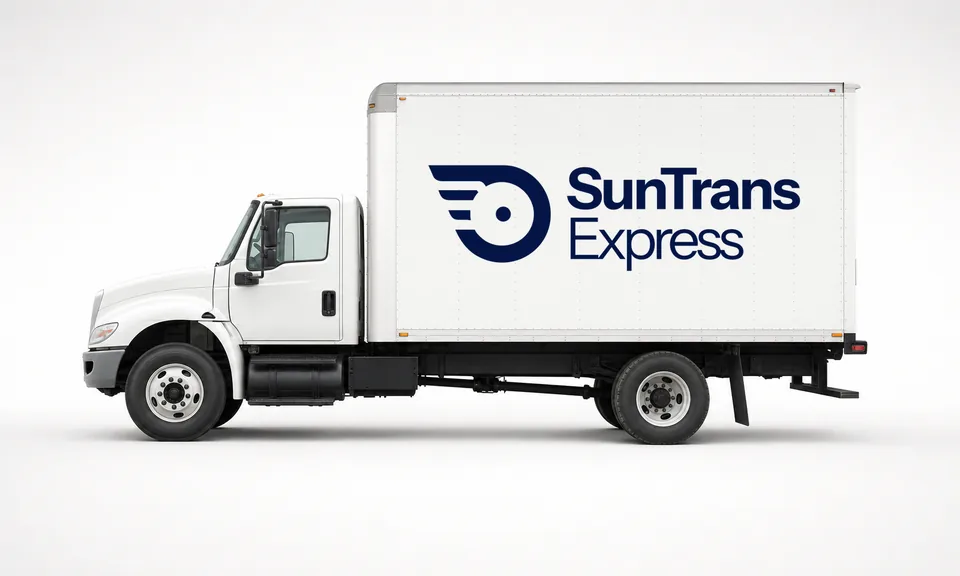
Under 376.11(c), the carrier acquiring the use of your truck must identify it as being in its service, and during the lease it does that under the vehicle marking rules in part 390. This is one of the few parts of the leasing rules that survives the exemptions: section 376.21 opens with “Except for § 376.11(c) which requires the identification of equipment,” before listing the cases the rest of part 376 does not cover.
The marking rule itself is 49 CFR 390.21. It applies to self-propelled commercial motor vehicles, and section 390.5 counts a vehicle as one in interstate commerce when its weight rating or weight is “4,536 kg (10,001 pounds) or more.” On a leased truck the marking shows:
- “The legal name or a single trade name of the motor carrier operating the self-propelled CMV.” On a lease that is the carrier you leased to, not your own business name.
- The USDOT number FMCSA issued to that carrier, with the letters USDOT in front of it.
- If your own name or company name is also on the truck, the carrier’s name and USDOT number must be “preceded by the words” operated by. Your name can stay, as long as it is clear who is operating the truck.
The marking “may be painted on the CMV or may consist of a removable device,” as long as it meets the same legibility rules. On a lease, a removable device can come off when the lease ends; lettering painted on the truck stays. The general marking basics for box trucks, such as marking both sides, are in our guide to non-CDL box truck requirements.
The papers that ride in the cab
Two sets of documents have to travel with a leased truck.
The lease or a lease statement. Under 376.11(c)(2), unless a copy of the lease is carried on the equipment, the carrier must keep a statement with the truck “certifying that the equipment is being operated by it.” The statement must also give “the name of the owner, the date and length of the lease, any restrictions in the lease relative to the commodities to be transported, and the address at which the original lease is kept by the authorized carrier.” The carrier prepares it. Before your first trip, check that one or the other is in the cab and that your name and the lease dates on it are right.
Trip documents. Under 376.11(d)(1), the carrier must prepare documents for each trip the truck makes in its service, containing “the name and address of the owner of the equipment, the point of origin, the time and date of departure, and the point of final destination.” The carrier must also carry documents with the truck during the trip that identify the lading and are “clearly indicating that the transportation is under its responsibility.” Under a master lease, a copy of the master lease in the truck plus the freight documents for the specific load can cover this.
In practice that means the lease or its statement stays in the truck for the whole lease, and the load paperwork changes with every trip.
Insurance: what the lease has to name
The insurance does not change on the doors, it changes in the lease. Section 376.12(j) requires the lease to state the carrier’s legal obligation to keep insurance for the protection of the public and who provides any other coverage for operating the truck. What those clauses look like, including bobtail coverage and copies of policies you buy through the carrier, is in the main guide linked above. For what the coverage you buy yourself tends to cost, see our guide to owner-operator insurance cost.
When the lease ends: the receipt and the markings
Who removes the carrier’s identification when the lease ends, how it goes back and what that does to your final pay are lease clauses covered in the main guide. Two details in 376.12(e) matter for the truck itself: the devices to be returned are those “other than those painted directly on the equipment,” and the lease must specify “the manner in which a receipt will be given to the authorized carrier by the equipment owner when the latter retakes possession” of the truck, if the lease requires a receipt at all.
That gives you a short checklist for the last day of a lease:
- Take off the carrier’s removable markings, or confirm in writing who will, as the lease says.
- Return the devices the way the lease describes.
- Give or get the closing receipt, with the date and time, if your lease calls for one.
- Take the lease statement and the carrier’s documents out of the cab.
The marking rule names the carrier “operating” the truck. Once the lease has ended, a door that still shows the old carrier’s name and USDOT number no longer matches who is running the truck. Before the next load, whether under another carrier’s lease or your own authority, the doors should show the operating carrier for that load.
FAQ
Does my own company name have to come off the truck when I lease on? No. Under 390.21(b)(3), another name can appear on the truck as long as the operating carrier’s name and USDOT number follow it, preceded by the words operated by.
Can the carrier use magnetic signs instead of paint? Yes. 390.21(d) allows a removable device, as long as it meets the same legibility requirements as painted lettering.
Do I need a copy of the lease in the truck? Either a copy of the lease or the carrier’s statement described in 376.11(c)(2) has to be with the truck for the length of the lease.
Is a receipt required when I take my truck back? Only if the lease agreement requires one. The receipt at the start, when the carrier takes possession, is always required.
My box truck is rated under 10,001 pounds. Does any of this apply? The 390.21 marking rule is written for commercial motor vehicles as defined in 390.5. The leasing rules in part 376 apply to equipment used by authorized carriers, and the definition of equipment there is not tied to weight. Read your lease for how the carrier identifies a lighter truck.
What this looks like at SuntransExpress
SuntransExpress works with cargo van, Sprinter and box truck owner-operators on two paths, as set out on our owner-operator page: run under SuntransExpress authority, or keep your own MC and haul our freight. The page lists weekly pay and 24/7 dispatch support, and notes that your own MC is not required in many programs.
If you plan to run under our authority, the receipts, markings and cab papers above are the part of the lease you will handle on day one. The application asks for your equipment type, the vehicle year and whether you have your own MC authority, so you can tell us which path fits before we call you with loads. Questions before you apply can go to hr@suntransexpress.com or +1 (941) 337-52-33.
Got questions about running with us? Dispatch will walk you through it. No pressure, no obligation.
Talk to us
Recourse vs Non-Recourse Freight Factoring
How freight factoring works for van and box truck owners on their own MC, what recourse and non-recourse really cover, and the contract clauses…
Read the guide →
Rate Confirmation: What to Check Before You Haul the Load
A four-pass check of a broker's rate confirmation for van and box truck owners with their own MC: the sender, the load, the money…
Read the guide →
Lumper Fees: Who Pays, and How Owner-Operators Get Reimbursed
Who owes a lumper fee under federal law, how it gets paid at the dock, and the receipt and paperwork you need to get…
Read the guide →Ready to get on the road?
Weekly pay, 24/7 dispatch support, and nationwide expedited loads, with or without your own MC authority.