Non-CDL Box Truck: What You Need to Run Legally
The short answer
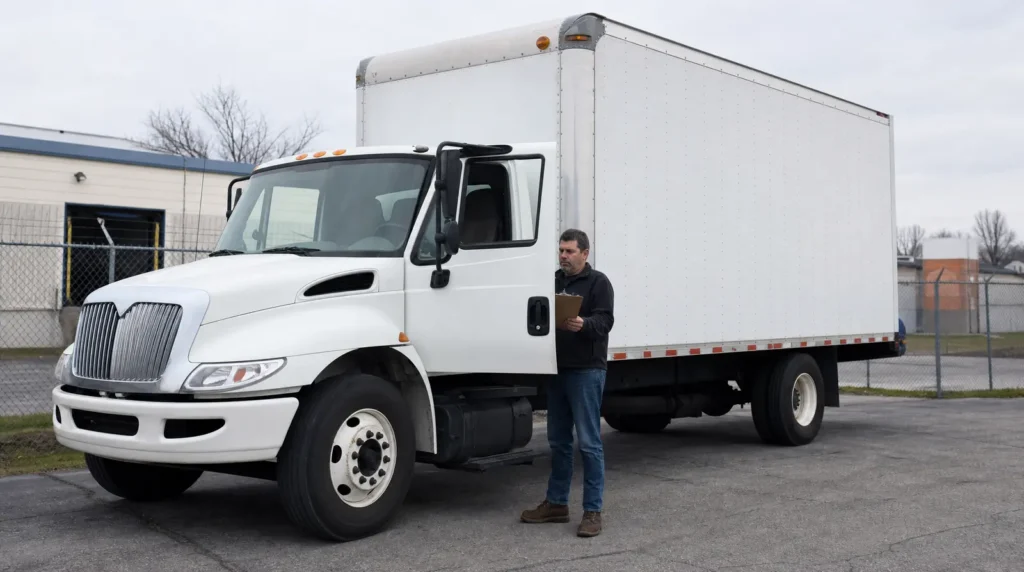
A box truck is non-CDL when its gross vehicle weight rating is 26,000 pounds or less, it is not placarded for hazardous materials, and it is not built to carry sixteen or more people. That is the whole test, and it is a rating stamped on the door jamb, not the weight of what you loaded this morning. Non-CDL does not mean unregulated. Once that truck is over 10,000 pounds rated and you are hauling for hire across state lines, you are operating a commercial motor vehicle: USDOT number, operating authority, a medical certificate, hours of service, an annual inspection and a driver qualification file all apply to you exactly as they apply to a Class 8. What you are exempt from is the license class and, in most cases, the federal drug and alcohol testing program. This guide covers what you have to have to run legally. Which truck to buy is a different question, and we answer it in the guide on choosing your first expedited unit.
The number that decides everything
Three ratings matter and people mix them up constantly.
GVWR is the maximum the manufacturer says the vehicle may weigh loaded, and it is fixed by the build. GCWR is the same idea for the truck plus anything it tows. Actual weight is what the scale reads today. Licensing is decided by the ratings. You do not get to run a 26,500 pound rated truck without a CDL because you only loaded it to twenty thousand.
The federal CDL threshold sits at 26,001 pounds. At or below 26,000 GVWR, a standard driver’s license covers the vehicle. That is why so much of the expedite fleet is built right up against the line: a 26,000 pound rated straight truck with a 26 foot box is the largest unit most operators can put a non-CDL driver in, which makes it the largest unit you can staff easily.
Two things drag a truck back across the line regardless of weight. Placarded hazardous materials require a CDL with a hazmat endorsement no matter how small the vehicle. So does a vehicle designed to carry sixteen or more occupants including the driver, which is not a box truck problem but is part of the same rule.
Towing is where people get caught. A non-CDL truck pulling a trailer can push the combination over the line, and above certain trailer ratings the combination requires a CDL even when the power unit alone would not. Check the combination rating before you hitch anything, not after.
USDOT number and operating authority
These are two separate registrations and having one does not give you the other.
A USDOT number identifies the carrier. In interstate commerce you need one once your vehicle is rated over 10,000 pounds, and immediately regardless of weight if you are hauling placarded hazmat or carrying passengers for hire. That threshold is why a rated 12,000 pound box truck is in the system while a cargo van rated at 8,600 usually is not.
Operating authority, still universally called an MC number, is the separate permission to haul regulated commodities for hire across state lines. It comes with an insurance filing requirement and a designated process agent, and it is the registration that actually lets you get paid by shippers and brokers directly. If you are leased on to a carrier you run under their authority and you do not need your own. If you are running for yourself you do. We cover the choice between those two paths in the guide on running under your own MC authority.
Some states also require intrastate registration if you never cross a state line, and the state thresholds are not always the federal ones. Several states pull the commercial vehicle definition down well below 10,000 pounds for their own roads. If your work is local, check your state before you assume you are exempt.
No Authority of Your Own Yet?
Many SunTrans Express programs don’t require your own MC. Our team helps with scheduling, rate negotiating and regulatory compliance.
The medical certificate
Any driver operating a commercial motor vehicle in interstate commerce needs a valid medical examiner’s certificate, usually called the DOT physical or the med card. This is not a CDL requirement. It follows the vehicle and the commerce, not the license class, and it is the single most commonly missed item among new non-CDL operators.
The exam has to be done by an examiner listed on the national registry, and the certificate runs up to two years, shorter if the examiner sets a shorter interval for a condition being monitored. Carry it, keep a copy in the qualification file, and diary the expiration. An expired card is an out of service condition at a roadside inspection, and it is entirely self-inflicted.
Hours of service and the ELD question
Hours of service applies by vehicle and commerce, not by license, so a non-CDL box truck in interstate for-hire service is subject to the same driving limits as anything larger: the daily driving cap, the on-duty window, the mandatory break and the weekly limits.
Whether you need an electronic logging device is a narrower question. The device requirement attaches to drivers who are required to keep records of duty status. The exception most non-CDL operators actually use is the short-haul provision: if you start and end at the same work location, stay within the defined air-mile radius and complete the day inside the allowed window, you keep a time record instead of a log and you do not need an ELD. Run outside that radius or blow the window more than a handful of times a month and the exception stops applying to you.
There are narrow further exceptions, including vehicles with pre-2000 model year engines and driveaway-towaway operations. Do not build a business plan on one. They are edge cases, they get audited, and the cost of an ELD is small compared to the penalty for being wrong about which one you qualified for.
Drug and alcohol testing, and why the answer surprises people
The federal drug and alcohol testing program applies to drivers who operate vehicles requiring a commercial driver’s license. A driver in a non-CDL box truck is generally outside it, which means no federal pre-employment test, no random pool, and no Clearinghouse query.
That is the regulation. It is not the whole picture. Many shippers, brokers and insurers require participation in a testing consortium as a condition of doing business regardless of what the rule says, and some freight, particularly in aerospace, defense and pharmaceutical work, will not be tendered to a carrier without it. Enrolling voluntarily costs little and removes a question that otherwise closes doors.
Inspection, marking and the paperwork that has to exist
Four things get checked and all four are cheap to keep current.
The truck needs an annual inspection by a qualified inspector, with the report retained and evidence on the vehicle. It needs the carrier name and USDOT number displayed on both sides in legible contrasting letters. Drivers do daily vehicle inspection reports, and defects noted have to be repaired or certified as not needing repair before the next trip. And there is a driver qualification file: the application, the license copy, the medical certificate, the annual motor vehicle record review and the annual violation certification.
None of this is difficult. It fails for one reason, which is that a single operator running the truck and the business treats the file as something to build if an audit happens. Build it once at the start and add to it as things renew. The paperwork side of getting started is covered in more detail in how to become an owner-operator.
Quick FAQ
Do I need a CDL to drive a 26 foot box truck? Not if it is rated at 26,000 pounds GVWR or below and it is not placarded for hazmat. Most 26 foot straight trucks are built exactly to that rating for this reason. Check the door jamb sticker rather than the listing.
Do I need a USDOT number for a non-CDL truck? In interstate commerce, yes, once the vehicle is rated over 10,000 pounds. Below that you generally do not, unless you are hauling hazmat or passengers. Your state may require registration at a lower threshold for intrastate work.
Do I need an ELD in a non-CDL box truck? Only if you are required to keep records of duty status. Most local and regional non-CDL operators use the short-haul exception and keep time records instead. Once you run outside that radius regularly, you need the device.
Am I subject to random drug testing without a CDL? Not under the federal program, which is tied to CDL operation. Customers and insurers frequently require a consortium anyway, and some freight is closed to carriers who are not enrolled.
Does a non-CDL truck still need cargo insurance? Yes, and the amount is set by what you haul and who you haul it for, not by the license class. Operating authority carries its own filing requirement, and brokers routinely require more than that minimum. The numbers are in the guide on what owner-operator insurance actually costs.
Can I get a ticket for being overweight in a non-CDL truck? Yes. Weight enforcement is about actual weight against legal limits and against your own ratings, and a rated 26,000 pound truck loaded to 27,000 is overweight whatever license the driver holds.
What this looks like at SunTransExpress
Most of our expedite fleet is non-CDL equipment: cargo vans, Sprinters and straight trucks built to the 26,000 pound line. Drivers who lease on run under our authority, which means the operating authority, the insurance filings and the process agent are ours, and the qualification file, medical certificate and hours of service remain yours to keep current. We will tell you which items are open before your first load rather than after it.
If you are deciding between running under your own authority and leasing on, or you want a straight answer about what your truck is and is not allowed to do, send your details through the owner-operator page, call +1 (941) 337-52-33 or write to hr@suntransexpress.com.
One caution worth stating plainly. Federal and state requirements are revised, and thresholds that have been stable for years still get amended. Everything above reflects the rules as they stand, and before you register anything it is worth reading the current text on the FMCSA site or confirming it with your state. We would rather point you at the source than have you rely on an article.
Got questions about running with us? Dispatch will walk you through it — no pressure, no obligation.
Talk to us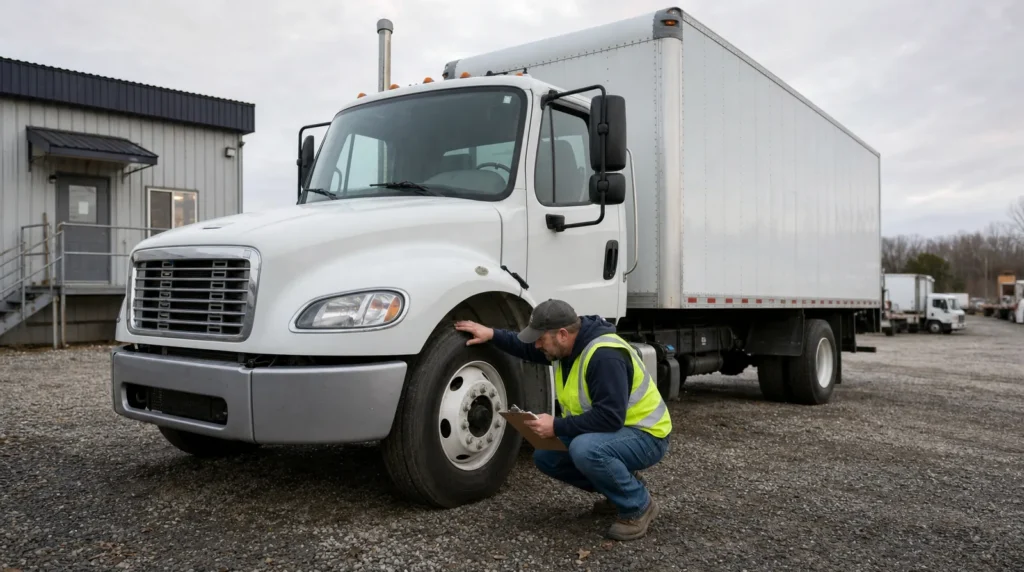
New Entrant Safety Audit: What a First Year Carrier Gets Checked On
What the FMCSA new entrant safety audit checks in your first 18 months under your own authority, the 16 violations that fail it, how…
Read the guide →
Cargo Van, Sprinter and Box Truck Owner-Operator Jobs: What the Posting Leaves Out
What a cargo van, Sprinter or box truck owner-operator posting leaves out: pay basis, whose authority, insurance, escrow and charge-backs, deadhead and detention, and…
Read the guide →
Box Truck and Cargo Van Loads: Where Owner-Operators Find Freight
Where box truck and cargo van freight actually comes from: load boards and what their tiers include, posting your truck, checking brokers against the…
Read the guide →Ready to get on the road?
Weekly pay, 24/7 dispatch support, and nationwide expedited loads — with or without your own MC authority.