Owner-Operator Contracts: How to Find Them and What to Check

Search “box truck owner-operator contracts” and you get job boards. That is the first thing worth knowing, because it tells you how the word is used in this business. A “contract” in expedite is almost never a guaranteed volume of freight. It is an agreement about how you get paid, who is responsible for what, and how either side gets out. The freight itself still has to be there. Understanding that difference is what stops a new operator signing something that promises steady work and delivers a phone that does not ring.
What “a contract” actually means
Three different things get called a contract, and they are not interchangeable.
A lease agreement with a carrier. You run under the carrier’s authority, the carrier finds and books the freight, and you are paid per load or per mile with agreed deductions. This is what most people mean when they say they are looking for contracts.
A broker or shipper contract. You have your own authority and you sign a carrier agreement with a broker or directly with a customer. It sets rates, payment terms, and liability. It rarely guarantees loads.
A dedicated lane. A specific run, on a schedule, for one customer. These exist, they are genuinely valuable, and they are almost never handed to an operator in their first month.
If you have not yet decided whether to run under your own authority or a carrier’s, settle that first. It changes which of the three you are even shopping for. Our guide on your own MC authority versus a carrier’s walks through that decision.
Where contracts actually come from
There are only four real sources, and each has a different failure mode.
- Leasing on with a carrier. Fastest way to steady dispatch. You trade rate percentage for someone else doing sales, billing, and compliance. The risk is picking a carrier whose freight does not match your equipment or your home base.
- Load boards. Immediate access, no commitment, and full exposure to the spot market. Fine as a supplement, punishing as a sole strategy, because you are bidding against everyone and you eat every empty mile.
- Direct customers. The best rates and the slowest to build. It means sales calls, a real business presence, and usually your own authority and insurance filings.
- Amazon, courier networks, and last-mile programs. High volume, fixed rates, and route-based rather than freight-based. It is a different business from expedite, with different economics and different hours.
Most operators who last end up with a primary carrier relationship and a secondary source they use to fill gaps. Very few survive on load boards alone.
Dedicated freight versus taking what comes
A dedicated lane pays less per mile than a good spot load and more per week than an average one. That is the trade, and the reason is utilization. Spot freight has better headline rates and worse deadhead, worse waiting, and worse predictability.
The number that matters is not the rate on the load. It is what you earned across the whole week, including the days you did not run. An operator taking 2.40 a mile three days a week earns less than one taking 1.85 a mile five days a week, and the second one knows where the truck will be on Thursday. We work through that arithmetic properly in what owner-operators actually earn.
Work That Matches Your Equipment
SunTrans Express connects box truck, sprinter and cargo van owner-operators with reputable companies. Weekly pay, nationwide.
What to read before you sign
Read the whole agreement. These are the clauses that decide whether it is a good one.
- How you are paid. Percentage of the linehaul or a flat rate per mile. If it is a percentage, ask percentage of what, and ask to see a real rate confirmation so you can check the number the percentage is applied to.
- When you are paid. Weekly settlement is standard. Find out what triggers the clock: delivery, or receipt of signed paperwork. That difference is often a week.
- Fuel surcharge. Whether there is one, how it is calculated, and whether it passes to you in full.
- Deductions. Every one of them, in writing. Insurance, escrow, plates, ELD, trailer rental, admin fees. A strong rate with four deductions can pay less than a modest rate with none.
- Escrow. How much is held, what it can be used for, and exactly how long after you leave before it is returned.
- Accessorials. Detention, layover, extra stops, and driver assist. Ask what the thresholds are and who has to file the claim.
- Termination. The notice period on both sides, and whether anything is withheld if you give notice.
- Exclusivity and non-compete. Whether you may take outside loads, and whether there are customers you cannot approach for a period after leaving.
Ask for a sample settlement statement from a real week, with the customer details removed. It answers more questions than the contract does, because it shows what actually lands in the account after everything comes out.
Red flags
Some of these are common enough to be worth naming plainly. A recruiter who quotes gross revenue and will not discuss deductions. A promise of guaranteed miles with no minimum written into the agreement. An upfront fee to be given access to freight. Pressure to sign the same day. Escrow with no stated return period. And a carrier who will not tell you their average weekly miles per truck, which is the single most useful number they have.
None of these are automatically fraud. All of them are reasons to slow down and get an answer in writing.
What equipment actually gets you work in expedite
Expedite runs on non-CDL and light equipment more than most people expect. Cargo vans and Sprinters carry the small, urgent, high-value freight. Box and straight trucks take the loads that are too big for a van and too urgent for LTL. A clean, well-maintained unit with a liftgate and an e-track interior gets offered more work than a bigger truck in poor condition, because dispatch sends the load to the unit that will not create a problem.
If you have not bought yet, our guide on choosing your first expedited unit covers what each class can actually carry and what it costs to run.
How this works at SunTransExpress
We lease on cargo van, Sprinter, and box truck owner-operators to run expedited freight under our authority. That means our dispatch finds the loads, our team handles the customer and the billing, and you get a written agreement with the deductions listed rather than described.
What we ask for is straightforward: a unit in good mechanical condition, a clean driving record, the insurance certificate, and willingness to run when the freight moves, which in expedite is frequently at short notice. The full requirement list and the onboarding steps are in how to become an owner-operator.
See what running with SunTransExpress involves and apply.
Questions before you apply are welcome. Call +1 (941) 337-52-33 or write hr@suntransexpress.com.
Quick FAQ
How do I get contracts with a box truck?
Lease on with a carrier that runs freight matching your equipment, or get your own authority and sign carrier agreements with brokers. Both work. Leasing on is faster to steady income; your own authority pays more per load and costs more to run.
Do I need a CDL for box truck owner-operator contracts?
Not for a straight truck under 26,001 pounds gross vehicle weight rating, which is why most expedite box trucks are specified just under that line. A CDL is required above it, and separately for any hazmat endorsement.
How do I get loads for my cargo van?
Lease on with an expedite carrier, or run load boards that carry van and Sprinter freight. Leasing on is usually the better first year, because van freight is dispatch-driven and awarded quickly to carriers who already have the relationship.
Are guaranteed miles real?
Sometimes, and only if the number is written into the agreement with what happens when it is not met. A guarantee that exists only in the recruiting call is not a guarantee.
Can I take outside loads while leased on?
It depends entirely on the agreement. Some carriers permit it, some prohibit it, and some allow it only when their own freight is unavailable. Ask before signing rather than after.
Got questions about running with us? Dispatch will walk you through it — no pressure, no obligation.
Talk to us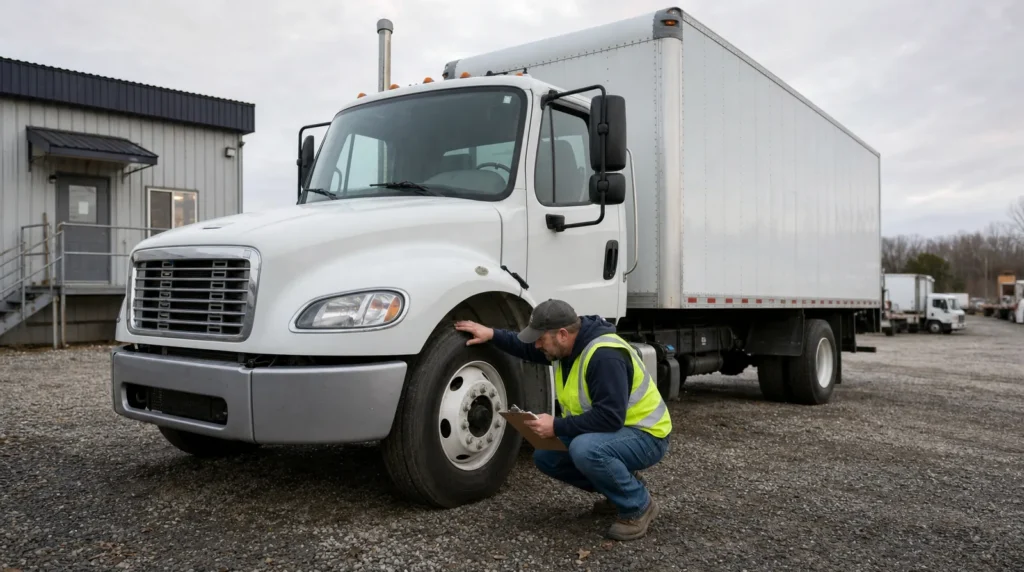
New Entrant Safety Audit: What a First Year Carrier Gets Checked On
What the FMCSA new entrant safety audit checks in your first 18 months under your own authority, the 16 violations that fail it, how…
Read the guide →
Cargo Van, Sprinter and Box Truck Owner-Operator Jobs: What the Posting Leaves Out
What a cargo van, Sprinter or box truck owner-operator posting leaves out: pay basis, whose authority, insurance, escrow and charge-backs, deadhead and detention, and…
Read the guide →
Box Truck and Cargo Van Loads: Where Owner-Operators Find Freight
Where box truck and cargo van freight actually comes from: load boards and what their tiers include, posting your truck, checking brokers against the…
Read the guide →Ready to get on the road?
Weekly pay, 24/7 dispatch support, and nationwide expedited loads — with or without your own MC authority.